

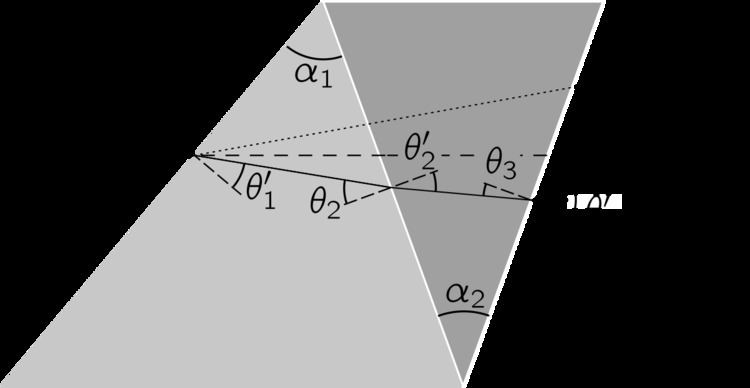
Understanding the various directions of prism compounds necessitates a comprehensive exploration into the intricate world of optics. Prisms are optical elements that refract light, changing its direction and manipulating its properties. Prism compounds are assemblies of multiple prisms designed for specific optical functions. This article aims to elucidate the different directions of prism compounds and the applications they facilitate.
At the outset, it is essential to delineate the basic types of prisms. Primarily, we categorize prisms into three main classes: dispersive prisms, reflecting prisms, and beam-splitter prisms. Each type serves distinct optical purposes, reflecting the versatility of prism compounds.
Dispersive prisms are predominantly employed to separate light into its constituent wavelengths. Utilizing the phenomenon of dispersion, these prisms bend different wavelengths of light at varying angles. For instance, when white light enters a dispersive prism, it splits into a spectrum of colors, reminiscent of a rainbow. This principle of dispersion is pivotal in applications like spectroscopy, where the identification of materials relies on their unique spectral fingerprints.
Reflecting prisms, on the other hand, direct light through reflection rather than refraction. These prisms typically consist of a 45-degree angle that redirects the incident light by 90 degrees. The pivotal application for reflecting prisms is found in optical devices such as binoculars and periscopes, where altering the direction of sight is paramount. The images produced by reflecting prisms are often reversed, a crucial aspect to consider in visual acuity and alignment during usage.
Beam-splitter prisms serve a different purpose altogether; their function is to divide an incident light beam into two distinct paths. Used extensively in photography, laser applications, and optical computing, beam-splitter prisms afford users the capacity to manipulate light effectively. By utilizing various coatings, these prisms can achieve specific transmissive and reflective ratios, enabling refined control over light paths.
When discussing the directions of prism compounds, it is imperative to address the alignment and configuration of individual prisms within the assembly. Prism compounds can manifest in a myriad of orientations—each characterized by its unique optical outcome. The positioning of prisms within a compound dictates the ultimate direction of the transmitted light.
One common assembly involves cascading prisms, where multiple prisms are aligned linearly to achieve an extended light path. This configuration allows for greater dispersive effects, enhancing spectrographic analyses. This directionality is vital in scientific applications, where minute discrepancies in wavelength can yield significant insights into material composition.
Conversely, an alternative assembly, known as the “prism cluster,” employs non-linear arrangements. This formation integrates prisms at various angles, creating a compound capable of multifaceted light manipulation. Clusters are particularly advantageous in advanced optical systems, such as those employed in theaters for projection or in complex camera systems.
The angular position of each prism not only affects the direction of light but also influences crucial characteristics such as magnification, focus, and image quality. Therefore, precise calculations during the design phase of prism compounds are essential for optimizing their performance across diverse applications.
Furthermore, the concept of polarization introduces another layer of complexity to the discussion of prism directions. Some prism compounds are designed to manipulate polarized light, which is critical in numerous optical technologies. By selectively transmitting light waves aligned in specific orientations, specialized prisms can enhance image contrast and reduce glare, thus improving visibility in various settings, from sunglasses to LCD screens.
Modern advancements in materials science have ushered in the use of innovative substrates for constructing prism compounds. Aspherical lenses and dielectric coatings, for instance, present opportunities for enhancing the efficiency of light manipulation. These materials can vastly improve the performance of prism compounds by minimizing aberrations and maximizing clarity across the visible spectrum.
Another noteworthy consideration in the design of prism compounds is the incorporation of computer simulation and modeling. Utilizing software to predict light paths through complex prism assemblages has revolutionized the engineering of optical systems. Virtual modeling tools allow designers to visualize interactions between prisms, thus providing insights into potential inefficiencies and areas for enhancement prior to physical manufacturing.
In conclusion, understanding the directions of prism compounds spans a wide spectrum of optical phenomena and applications. From the fundamental role of single prisms in dispersing light to intricate assemblies capable of manipulating light paths with precision, prism compounds are integral to modern optics. The varying directions, combinations, and configurations of prisms offer unparalleled opportunities for innovation in fields ranging from telecommunications to entertainment. A robust comprehension of these principles is essential for further advancements in optical technology, serving as a foundation for ongoing exploration and refinement in this fascinating domain.

Leave a comment