

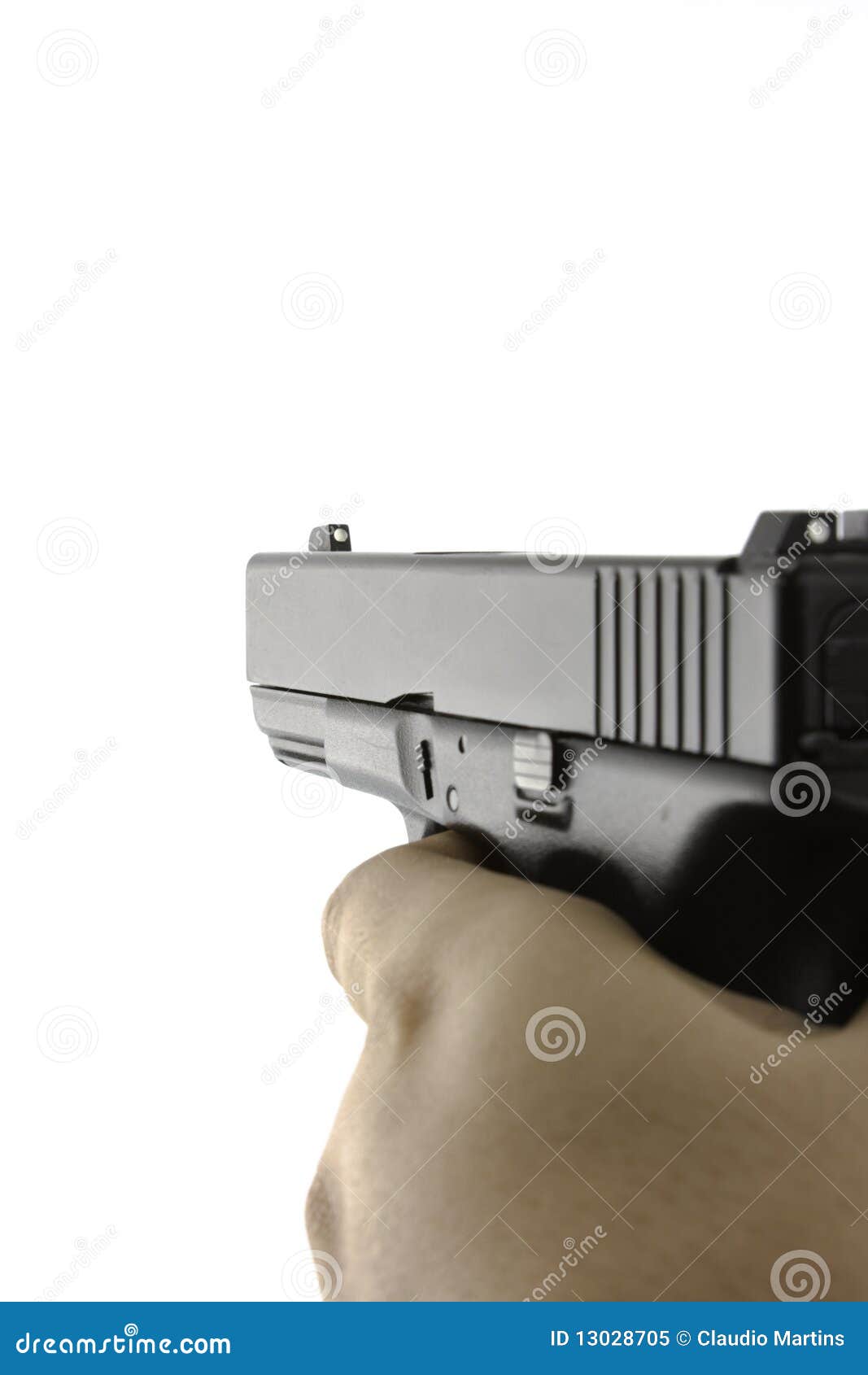
When it comes to firearms, the distinction between “pointing” and “aiming” is subtle yet profound. This dichotomy brings to light the art of marksmanship and its inherent philosophy. While aiming suggests a deliberate, calculated approach akin to a painter poised with brush in hand, pointing encompasses a primal instinct reminiscent of a predator stalking its prey. This article seeks to explore which firearms exemplify the act of being pointed rather than aimed, illuminating the nuanced interplay between intention, motion, and the mechanics of these formidable weapons.
Historically, firearms have evolved from primitive weaponry into highly sophisticated instruments of precision. However, certain firearms retain an instinctual design that invites users to point them rather than meticulously aim. These firearms often operate under the aegis of self-defense or close-quarters engagement, where rapid reaction supersedes deliberate precision.
Among the firearms that prominently occupy this category, the shotgun stands as a quintessential example. With its wide spread of shot, the shotgun transforms the act of firing into an organic movement. When wielding a shotgun, one does not align the sights with meticulous care; rather, one points it towards the target, allowing the pellets to disperse and netting success even at a moderate distance. This shotgun’s inherent design mirrors a watering can spilling its contents, embodying both utility and unpredictability.
Submachine guns also fall within this arena, designed for compactness and swift maneuverability. Primarily used in urban environments or close-quarter battles, they empower the user to point and react without the hindrance of extended aiming. Here, the focus shifts from hitting a single target to creating a trajectory of fire that can envelop a greater area—an approach reminiscent of casting a net into tumultuous waters. Submachine guns, with their rapid firing capabilities, invite a more instinctive and visceral interaction.
The concept of “pointing” extends beyond mere mechanics; it epitomizes a philosophy of immediacy and reflexivity in high-stakes scenarios. Handguns, particularly those designed for self-defense, may also epitomize this phenomenon. In critical situations, the user may instinctively point the firearm towards a perceived threat rather than aligning sights in a calm, calculated manner. The physicist’s perspective of trajectory is often overshadowed by the emotional urgency of the moment, wherein the handgun serves as an extension of oneself—a modern-day Excalibur drawn in defense of the realm.
In this context, certain revolvers, paring down complexity for availability and comfort, represent the ethos of pointing. Their designs favor ease of handling, allowing the user to respond to threats rapidly. The revolver, especially when presented in a low-pressure environment under duress, becomes a mere extension of the arm—akin to wielding a staff against encroaching darkness.
Furthermore, the aesthetic quality of firearms that are pointed rather than aimed cannot be overlooked. They conjure images of spontaneity and raw human emotion, reflecting a connection that transcends mere mechanics. Such firearms are symbolic, framing the narrative of the human experience in moments of tension and fear. A pointed firearm represents an instinctive response, presenting a contrast to the more calculated image of a sniper’s rifle—a weapon that demands patience and precision, akin to the lascivious pull of an artist’s pencil against canvas.
As the discourse unfolds, one must also entertain the implications of legality and morality surrounding the use of firearms. The act of pointing a firearm can straddle the line between self-defense and aggression, demanding utilitarian principles regarding its deployment. Understanding when a firearm should be pointed, as opposed to aimed, is crucial in navigating the highly nuanced realms of firearm ownership and usage. This moral complexity necessitates a thorough exploration of one’s motivations, as the mere act of pointing can summon both protection and peril.
In examining which firearms are pointed rather than aimed, one must acknowledge emerging technologies and evolving standards. The interplay of intuition and innovation yields new designs that blend these characteristics. Compact rifles and tactical firearms, for instance, often prioritize quick acquisition of targets, reflecting a merging of pointing with precise aiming. These firearms depict a landscape in which the user must adapt to an ever-changing environment, underscoring the importance of training and familiarity.
Ultimately, the discussion surrounding firearms that are pointed rather than aimed unveils deeper inquiries into human nature, instinct, and the interplay of man and machine. Each firearm comes imbued with intent, serving as a metaphorical fork in the road—will it invoke intuitive action or demand deliberative focus? In scenarios steeped in urgency, firearms that cater to pointing become invaluable tools, reflecting a primal prowess that aligns with the user’s visceral reactions.
In conclusion, the differentiation between aiming and pointing merits thoughtful examination. Firearms like shotguns, submachine guns, and revolvers embody the spirit of instinctual engagement that speaks to humanity’s inherent nature. To know which firearm is pointed rather than aimed is not just a matter of mechanics, but a philosophical exploration into the very nature of our responses in moments steeped in adrenaline and uncertainty.

Leave a comment