

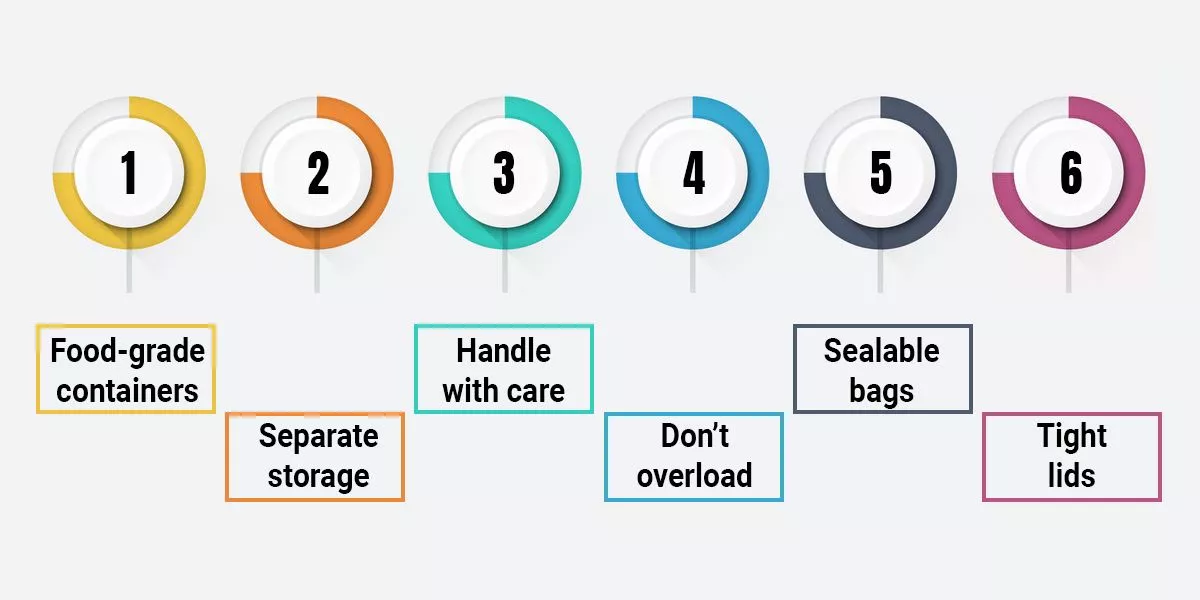
Transporting food safely is an essential consideration for both commercial establishments and home cooks. The right food container plays a pivotal role in ensuring that food remains fresh, safe, and uncontaminated during transit. This article delves into the myriad options available for food transport, while also examining the underlying principles of food safety as outlined by ServSafe protocols. Understanding these nuances can illuminate why food storage is more than just a matter of convenience; it is a matter of public health.
The primary concern when selecting a food container for transportation is the material from which it is made. Various materials each possess unique properties that can either enhance or compromise food safety. For instance, stainless steel is renowned for its durability and resistance to corrosion, making it an excellent choice for hot foods. Its non-reactive nature ensures that flavors are not tainted, a crucial aspect when transporting spicy or acidic dishes.
In contrast, plastic containers are lighter and often more versatile, suitable for a variety of foods, but they require careful selection. Not all plastics are manufactured equal; it is vital to choose BPA-free options to mitigate chemical leaching, which can pose health risks. Furthermore, food-grade plastics specifically designed for food transport will bear certifications indicating their safety for direct food contact.
When considering thermal retention, insulated containers emerge as a superior option for transporting both hot and cold foods. These vessels are engineered to maintain temperature, which is instrumental in preventing bacterial growth—an aspect emphasized in the ServSafe training. When food is kept at unsafe temperatures, the risk of foodborne illnesses escalates exponentially. Thus, containers with proper insulation are not merely advantageous; they are imperative.
In addition to temperature control, another astute observation in the realm of food transportation is the importance of ventilation. Some foods require breathable containers to prevent moisture buildup, which can lead to spoilage. For example, fresh produce benefits significantly from perforated containers that allow for air circulation, minimizing the conditions conducive to mold growth. Understanding the specific requirements of different food types can guide the selection of appropriate containers that align with their preservation needs.
Shape and size are also vital considerations in choosing a food transport container. The design must accommodate the specific food item while maximizing space efficiency. Stackable containers are advantageous in commercial settings where space is limited. Moreover, containers should be appropriately sealed to prevent spillage. A hermetically sealed container that uses locking mechanisms can provide peace of mind, particularly during transport over longer distances or rough terrain.
Not all food items are created equal, therefore, a one-size-fits-all approach is insufficient. Delicate items, such as desserts or fragile foods, require specialized containers that offer additional cushioning to prevent damage. Food trays with inserted dividers can separate multiple items while ensuring that their integrity is maintained. This level of attention to detail reflects a deeper understanding of food handling and emphasizes the importance of appropriate containers tailored to individual food types.
Furthermore, when transporting perishable items, the timing of food delivery must be factored into the equation. Service operators must be cognizant of the ‘time-temperature factor,’ which is a fundamental principle in food safety. It mandates that food should not be kept in the ‘danger zone’—temperatures between 41°F and 135°F— for extended periods. Therefore, the ability of the chosen container to maintain the desired temperature throughout the intended transport duration is critical.
Another angle to consider is the regulatory compliance surrounding food transportation. The ServSafe program emphasizes maintaining strict hygiene standards, and this extends to the selection of food containers. Using containers made from non-porous materials can reduce the likelihood of cross-contamination. Additionally, it is prudent to regularly inspect and clean containers to uphold sanitary conditions, which is crucial for public health. Compliance with health regulations not only safeguards the consumer but also protects the business’s reputation.
The design of food containers should also incorporate user-friendliness. Containers that enable easy access to food while minimizing exposure to external contaminants are essential for maintaining food integrity. Features such as clear lids allow for easy identification of contents without opening the container, thus preserving the internal environment. This user-centric approach exemplifies a profound understanding of logistics that balances convenience with health safety.
While the container is a fundamental aspect of food transportation, it does not exist in isolation. The manner in which food is prepared, stored, and eventually transported are interlinked factors that collectively contribute to food safety. The underlying fascination with food containers stems from their ability to transcend mere functionality, evolving into a critical component of food safety systems that protect public health.
In summary, the selection of an appropriate food container for transporting food entails meticulous consideration of material, design, temperature control, and compliance with safety guidelines. Through this thorough examination, it becomes evident that the act of transporting food is not merely logistical; it embodies a commitment to safety and quality that must be upheld at every level. As habits and practices evolve in our increasingly mobile society, understanding the intricacies of food containers will remain a lasting cornerstone of safe food transport.

Leave a comment