

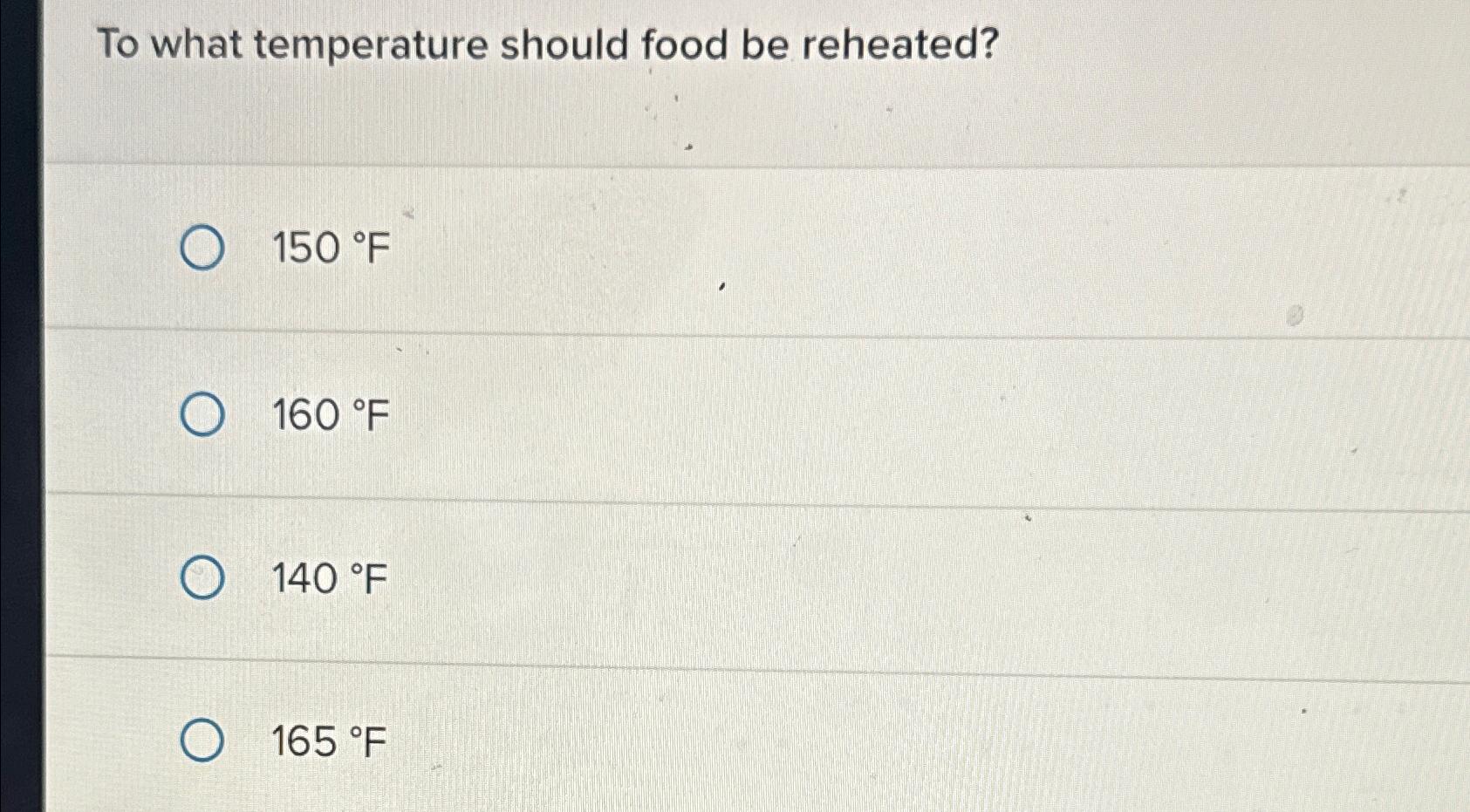
In the intricate tapestry of food safety, an often overlooked yet paramount thread weaves through the culinary landscape: the necessity of reheating certain foods to a minimum internal temperature of 165°F. This figure is not merely a number; it is a sentinel protecting diners from the lurking specters of foodborne pathogens. The importance of this guideline transcends mere culinary practice; it reflects a commitment to health and wellness. Understanding which foods demand such diligent attention is essential for both culinary novices and seasoned cooks alike. Herein lies a detailed exploration of the categories of foods that must embrace the fiery kiss of the heat to ensure safety and enjoyment.
1. Poultry: The Feathered Sentinel
Poultry—chicken, turkey, and duck—constitutes a primary category requiring precise reheating. When improperly stored, these avian delights may serve as a fertile ground for pathogens such as Salmonella and Campylobacter. The challenge lies not just in their raw state but also in the leftover portions that, if unintentionally under-reheated, can be detrimental. The golden rule is that all forms of poultry, whether whole or in pieces, must reach a temperature of at least 165°F to vanquish any lurking foes. This is particularly crucial for stuffed versions, where the danger can lie quietly nestled within the stuffing where heat may fail to penetrate.
2. Meats: The Carnivorous Challenge
Beneath their succulent exteriors, various meats too harbor the potential for insidious pathogens. Ground meats such as beef, pork, and lamb cry out for attention; when they are processed, the risk of contamination escalates. A meaty mélange that includes previously cooked meats—spaghetti Bolognese or shepherd’s pie—must also reach the 165°F threshold upon reheating. Roasts, whether it be a prime rib or a leg of lamb, demand rigorous reheating practices to ensure no culinary beast remains cloaked in safety’s disguise.
3. Seafood: The Aquatic Enigma
Like sirens singing from the depths of an ocean, seafood captivates the palate but necessitates unwavering vigilance. Fish and shellfish can fall victim to Vibrio and Listeria; thus, when reviving leftovers, they too must be subjected to the relentless embrace of 165°F. The culinary artistry involved in preparing dishes like seafood risotto or clam chowder is exquisite, yet one must remember the whispered warnings of food safety. This adherence to temperature ensures that the ocean’s bounty serves as a delightful feast rather than a hazardous dalliance.
4. Egg Dishes: The Ominous Orbs
Eggs—often regarded as nature’s compact powerhouses—pose unique challenges in the reheating arena. Dishes that incorporate eggs, such as quiches, frittatas, or egg casseroles, must be heated to 165°F to ensure that any lurking bacteria, notably Salmonella, are eradicated. The delicate balance between perfect culinary texture and safety is paramount; therefore, culinary artisans must wield their thermometers with precision. The warmth that envelops an egg dish can transform it from a mere sustenance into a warm embrace of comfort food, provided safety is ensured.
5. Soups and Stews: The Brothy Guardians
Hearty soups and stews, often slow-simmered to depth and flavor, stand as a hallmark of comfort. Yet these rich concoctions pose a duality: they can become breeding grounds for harmful bacteria if not reheated correctly. Any soup containing meat, poultry, or dairy should reach the aforementioned 165°F upon reheating. The transformative effect of heat on these dishes illustrates a culinary metamorphosis whereby spirited flavors awaken, but vigilance must reign supreme. The dance of steam rising from a bubbling pot serves as a reminder of both nourishment and necessity.
6. Grains and Pasta: The Starch Spectrum
In the realm of grains and pasta, while they may not appear as likely candidates for foodborne illness, they are not without their risks. Baying for attention are dishes like risottos, casseroles, and pasta salads—often enriched with previously cooked proteins and creamy sauces. When reheating such dishes, ensure that they reach 165°F throughout to fend off harmful bacteria. The texture, rich with the essence of grains, should be cherished, yet every bite must be taken with the cloak of safety firmly wrapped.
Conclusion: The Harmonious Blend of Safety and Flavor
The art of reheating food is more than an act of culinary revival; it is a demonstration of responsibility and commitment to food safety. As diverse and vibrant as the foods we enjoy, the need to ensure they are reheated to at least 165°F serves as a bridge connecting flavor and health. By adhering to these guidelines, we not only protect ourselves from the potential perils of foodborne illness but also honor the fruits of our culinary endeavors. Culinary mastery is rooted not just in the quality of ingredients but equally in the diligence of safe preparation and reheating, transforming any meal into a celebration of both taste and health.

Leave a comment