

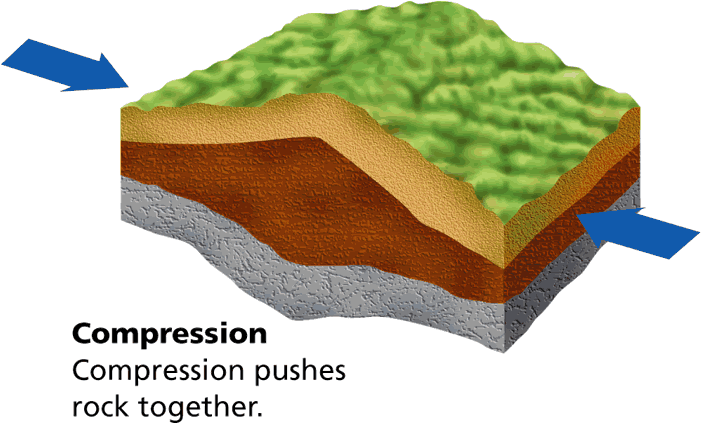
Compressional stress, a fundamental force that acts upon geological formations, gives rise to a myriad of geological structures and phenomena that are essential to understanding the dynamics of Earth’s crust. This article delves into the intricacies of compressional stress, exploring the various forms it produces, the underlying processes involved, and the broader implications of these formations in the field of geology.
Understanding Compressional Stress
At its core, compressional stress occurs when tectonic plates converge, leading to the shortening and thickening of the Earth’s crust. The immense pressure exerted on geological materials can lead to deformation in both elastic and plastic manners, which prompts a series of geological transformations. The prevalent logging of these changes reveals deep insights into the Earth’s geodynamic processes, fostering a fascination with the robust forces at play beneath our feet.
The Major Geological Structures Formed by Compressional Stress
Several notable geological formations arise as a result of compressional stress, each unique in its characteristics and implications. Understanding these structures not only elucidates the power of tectonic forces but also provides a framework for interpreting the geological history of an area.
1. Folds
The first prominent structure associated with compressional stress is the formation of folds. Folds occur when rock layers bend under pressure, resulting in a series of wave-like structures. There are various types of folds, such as:
- Anticlines: These are upward arching folds, where the oldest layers of rock are typically found at the core of the fold.
- Syclines: In contrast, synclines are downward bending folds, where younger rock layers are situated toward the center.
- Overturned Folds: These occur when one limb of the fold is tilted beyond the vertical, suggesting intense compressional forces at play.
Folds not only illustrate the effects of compressional stress but also play a crucial role in hydrocarbon reservoirs and water aquifers, influencing where valuable natural resources may be found.
2. Faults
Another significant outcome of compressional stress is the formation of faults, specifically reverse faults and thrust faults. These geological features occur when rocks fracture and slip in response to applied forces. Key characteristics include:
- Reverse Faults: In these faults, the hanging wall moves upward relative to the footwall, typically occurring in regions experiencing high compressional stress.
- Thrust Faults: A type of reverse fault, thrust faults exhibit a gentle dip and can cause significant displacement, with older rocks being pushed over younger rocks.
The study of faults is essential as they are sites of seismic activity, shedding light on the occurrence of earthquakes and their potential impact on human landscapes.
3. Mountain Ranges
On a larger scale, compressional stress is a driving factor in the creation of mountain ranges. Typically, these ranges are formed at convergent plate boundaries, where oceanic and continental plates collide. The ensuing uplift and buckling of the crust can result in magnificent formations such as the Himalayas and the Andes. Mountain-building, or orogeny, not only reshapes the landscape but also affects climate patterns and biodiversity in surrounding regions.
4. Accretionary Wedges
Compressional stress also contributes to the formation of accretionary wedges, which are thick accumulations of sediment and rock that form at convergent plate boundaries. As an oceanic plate subducts beneath a continental plate, sediments are scraped off the subducting plate and gradually accumulate, forming these wedge-like structures. Accretionary wedges provide valuable insights into the geological history of the Earth and hold significant implications for understanding sedimentation processes and tectonics.
5. Metamorphism
The effects of compressional stress extend beyond structural formations to include metamorphism, the process by which existing rocks undergo changes due to heat, pressure, and chemical processes. As rocks are subjected to compressional forces, they may experience foliation, where minerals align perpendicularly to the direction of the applied stress, resulting in schist or gneiss formations. This metamorphic transformation contributes to the rock cycle and enhances our understanding of Earth’s dynamic processes.
The Ecological and Societal Implications of Compressional Stress
The significance of the geological formations resulting from compressional stress goes far beyond academic curiosity. These structures profoundly impact ecosystems, human habitation, and resource availability. For example, folded structures can create diverse habitats by influencing microclimates, while the presence of faults can lead to natural hazards such as earthquakes, necessitating awareness and preparedness in affected regions.
Moreover, understanding these geological phenomena is crucial for resource extraction, such as hydrocarbons and minerals, which often accumulate in specific geological settings influenced by compressional forces. As societies increasingly rely on these resources, the implications of geological stress become intertwined with economic and environmental considerations.
Conclusion
In sum, the geological forms that arise from compressional stress are multifaceted and essential to understanding the Earth’s geological mechanisms. From intricate folds and impactful faults to majestic mountain ranges and transformative metamorphism, the consequences of compressional stress reveal a world of complexity beneath the Earth’s surface. This knowledge not only fascinates geologists but also underscores the importance of geological processes in shaping our planet, influencing both natural ecosystems and human endeavors.

Leave a comment