

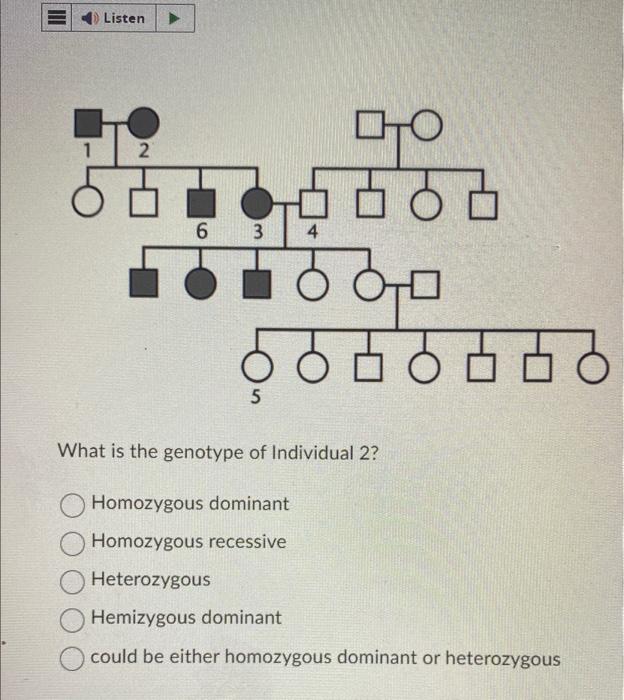
Understanding the principles of genetics is pivotal in various domains, from evolutionary biology to medicine. One essential concept within this field is the differentiation of genotypes, particularly homozygous recessive genotypes. This article delves into comprehensively elucidating the notion of homozygous recessive genotypes, their implications, and the various contexts in which they manifest.
Defining Genotypes
To comprehend the concept of homozygous recessive genotypes, one must first grasp the basic definitions associated with genetics. A genotype refers to the genetic constitution of an organism, encompassing the alleles inherited from the parents. Alleles are different forms of a gene. For practical purposes, alleles are typically denoted as uppercase (dominant alleles) and lowercase letters (recessive alleles). An organism possessing two identical alleles for a particular trait—whether two dominant or two recessive—is termed homozygous. In contrast, an organism with two different alleles is termed heterozygous.
Identifying Homozygous Recessive Genotypes
A homozygous recessive genotype is represented by two recessive alleles for a specific gene, denoted as ‘aa’ where ‘a’ symbolizes the recessive allele. Such characters typically manifest phenotypically when no dominant allele is present. This stands in contrast to homozygous dominant genotypes (e.g., ‘AA’) and heterozygous genotypes (e.g., ‘Aa’). The expression of phenotypic traits is often dependent on the comparison between dominant and recessive alleles.
Examples of Homozygous Recessive Traits
Numerous examples illustrate the principles underlying homozygous recessive genotypes. One classic illustration arises from Mendelian inheritance in pea plants. In this instance, the allele governing flower color can exist in a dominant form (purple) and a recessive form (white). When a plant possesses the homozygous recessive genotype (ww), it will invariably exhibit white flowers, given the absence of the dominant allele to mask the recessive phenotype.
Another notable example is in human genetics, where certain traits, such as cystic fibrosis, follow a recessive inheritance pattern. The cystic fibrosis transmembrane conductance regulator (CFTR) gene can possess a homozygous recessive genotype (ff) leading to the manifestation of the disease. Individuals with this genotype exhibit symptoms when both inherited alleles are the recessive forms, underscoring an essential aspect of genetic pathology.
Phenotypic Expression of Homozygous Recessive Genotypes
The expression of a homozygous recessive genotype can have pronounced implications for an organism’s phenotype. For clarity, phenotype refers to the observable characteristics of an organism—these can include morphological features, physiological functions, or behavioral traits. Such phenotypic characteristics arise as a result of specific alleles interacting within an individual’s genetic framework.
It is crucial to recognize that the environment can also influence the expression of recessive traits, complicating the relationship between genotype and phenotype. For instance, even though a plant might genetically be homozygous recessive for a specific trait, environmental conditions such as temperature or nutrient availability can affect how or if that trait is expressed in the phenotype. Such intricate interactions highlight the complexity of genetic expression beyond mere inheritance.
Applications of Understanding Homozygous Recessive Genotypes
Grasping the concept of homozygous recessive genotypes proves invaluable across diverse fields. In plant and animal breeding, particularly in agriculture, this understanding aids in the intentional selection of desirable phenotypic traits. Breeders often utilize controlled crosses to manipulate genotypes, ensuring that homozygous recessive traits can propagate through subsequent generations, resulting in the enhancement of specific characteristics such as disease resistance or yield.
In a medical context, understanding homozygous recessive traits is crucial for diagnosing and managing genetic disorders. Genetic testing can determine an individual’s genotype, effectively identifying carriers of specific recessive alleles. This knowledge facilitates informed reproductive choices and advance planning, ultimately leading to better health outcomes for future offspring. It is also instrumental in developing gene therapies aimed at ameliorating the effects of detrimental recessive conditions.
Variants and Mutations in Homozygous Recessive Genotypes
With innovations in genomic sequencing, the study of mutations in homozygous recessive alleles has garnered heightened attention. Investigation into novel recessive mutations can illuminate pathways for disease resistance or susceptibility. Moreover, researchers are exploring how these mutations can be utilized in developing bioinformatics approaches to predict genetic disorders based on ancestry and familial lineage.
In conclusion, the exploration of homozygous recessive genotypes represents a cornerstone of genetic science. Through examining their defining characteristics, phenotypic manifestations, and applications, one gains insights into the fundamental principles that govern inheritance. The journey through genomics not only elucidates the complexities of living organisms but also paves the way for advancements in medicine, agriculture, and evolutionary biology. The layers of understanding that emerge from studying homozygous recessive genotypes are undoubtedly vast and promise to unfold even further in the future.

Leave a comment