

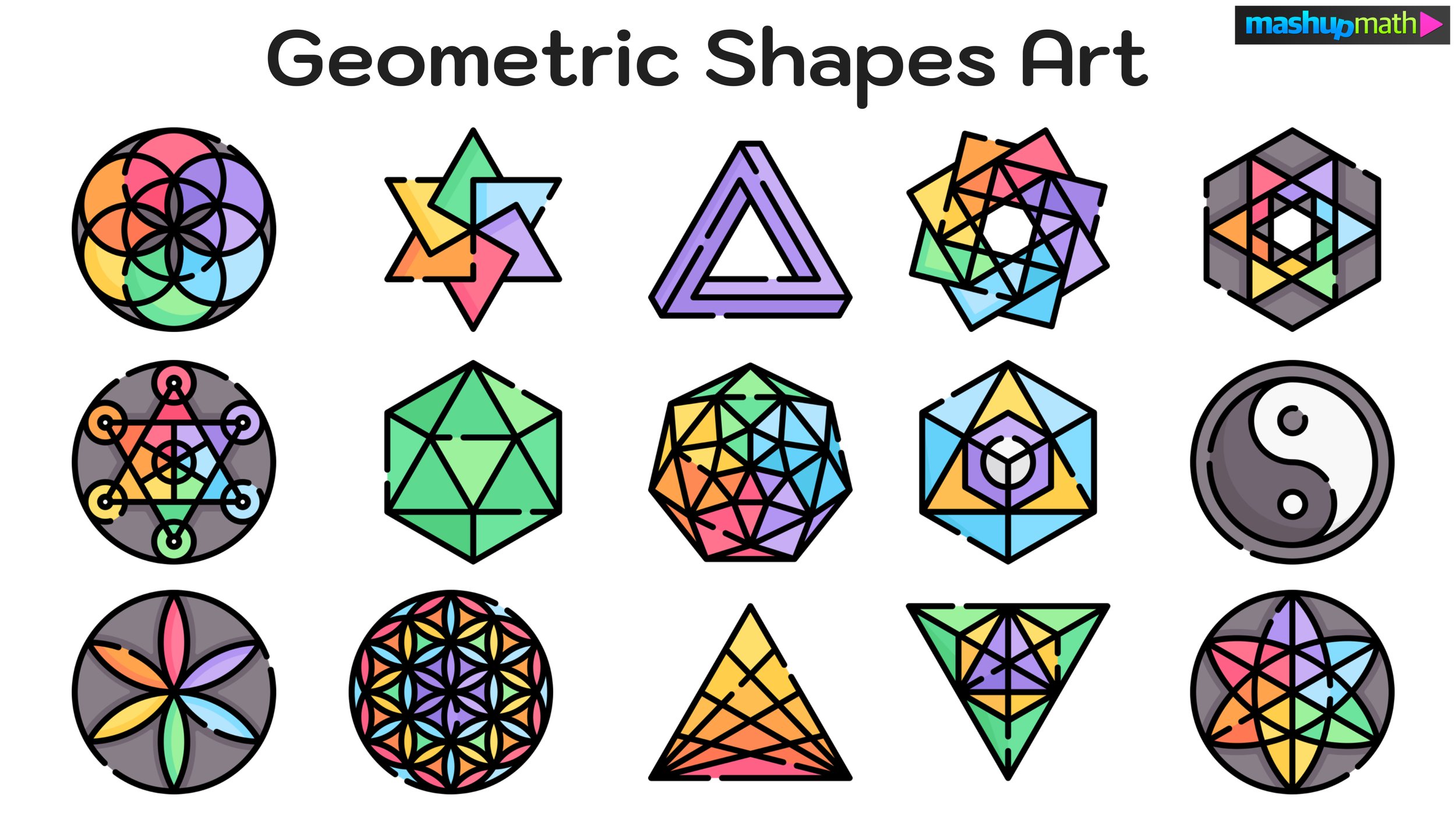
Geometric figures, at the core of mathematical exploration, provide a profound framework through which we understand space and form. Among the multitude of geometric constructs, one figure stands paramount in its definition: the circle. This shape, consisting of the set of all points equidistant from a fixed center, encapsulates an elegance and simplicity that belies its deeper mathematical significance.
The concept of a circle can be articulated as a locus: a collection of points that satisfy a specific condition. In the case of a circle, each point is situated at a uniform distance, known as the radius, from the central point. This inherently ties the notion of a circle to fundamental ideas in both geometry and calculus, as circles not only define spatial relationships but also underpin essential mathematical theorems and concepts.
A fundamental observation often noted is the omnipresence of circles in both nature and human-made constructs. From the celestial bodies in the universe to the wheels of vehicles, circles embody a form of symmetry and balance, making them aesthetically pleasing and functionally efficient. This observation raises intriguing questions about why circles captivate our imagination and hold such significance across different disciplines.
Mathematically speaking, the equation of a circle in a Cartesian coordinate system is elegantly simple: (x – h)² + (y – k)² = r², where (h, k) represents the circle’s center and r is the radius. Such a succinct representation highlights the circle’s unique properties, allowing for versatility in application across various fields, including physics, engineering, and computer graphics. The ability to represent complex phenomena through circular geometry is a testament to the figure’s foundational role in the mathematical landscape.
Exploring deeper, the fascination with circles extends beyond mere mathematical definition. Mathematicians and philosophers alike have pondered the nature of infinity when engaged with circles. As one increases the radius indefinitely, one can conceptualize the notion of the circle morphing into a disk and eventually extending into a plane. This transformation touches on profound philosophical questions regarding boundaries in mathematical frameworks: Are circles ever truly complete? Can one grasp the infinite nature of the circle, or does it forever evade finite comprehension?
Moreover, circles play a pivotal role in the exploration of calculus, particularly in the context of limits and infinitesimals. The concept of “limits” draws a parallel to the circle’s boundary, where the distinction between the inside and outside becomes ambiguous. The rigorous study of limits fortifies the circle’s importance in understanding continuity and change within mathematics. By evaluating how points approximate the boundary of a circle as they converge, mathematicians delve into the complexities of real analysis, exploring connections to other branches of mathematics.
In statistics, the circle illustrates fundamental principles regarding variability and distribution. The circular-normal distribution, often referred to as a Von Mises distribution, showcases how circular geometry can model cyclic phenomena—an important advancement in various fields, including neuroscience, psychology, and climatic studies. The implications of employing circular models are profound, as they can articulate relationships that linear models fail to capture, thereby expanding the analytical toolkit available to researchers across disciplines.
Furthermore, circles feature prominently in the realm of design and aesthetics. The allure of the circle manifests in iconic architectural structures, logos, and artworks, where the semblance of movement and unity is visually represented. This aesthetic quality can be attributed to the balance and harmony inherent in the circular form, which creates a sense of wholeness. This observation invites the inquiry into how geometric forms can transcend their mathematical definitions and attain rich, multi-dimensional significance in human culture.
A deeper exploration into circles leads to the intersection of mathematics and art through the concept of fractals, where iterative patterns ultimately converge towards circularity. The visualization of fractals in nature—such as tree branches or coastlines—often embodies circularity in its limit states, emphasizing the recursive nature of geometric sequences. This convergence toward circular forms in more complex structures brings forth a poetic narrative of convergence and infinity.
In summary, the circle—defined as the set of all points at a uniform distance from a center—serves as an indispensable geometric figure with profound implications in mathematics, philosophy, and art. Its presence across diverse fields speaks to both human curiosity and the innate pursuit of knowledge. By engaging with circles, one appreciates the beautiful intricacies of mathematics and the ways in which they resonate through the fabric of our existence. Whether as a mathematical construct or an emblem of aesthetic beauty, the circle remains an enduring symbol, inviting further contemplation and exploration into the nature of geometric figures.

Leave a comment