

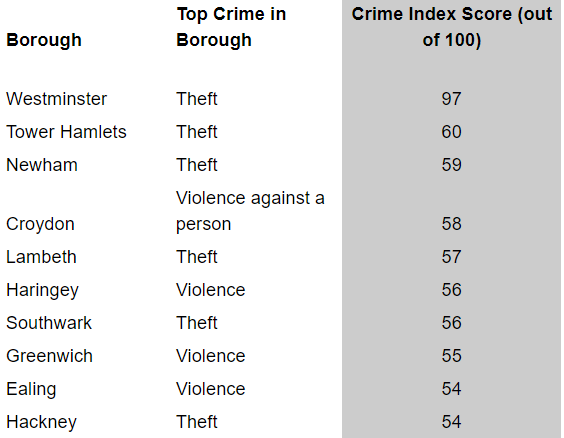
In the labyrinthine streets of London, a topic frequently broached in conversations, community forums, and media discussions pertains to the safety of its myriad boroughs. The allure of metropolitan cosmopolitanism juxtaposed with safety concerns evokes a compelling narrative. Among the diverse boroughs that form the mosaic of London, one has been categorically identified as the most unsafe—the borough of Westminster. This designation raises pertinent questions regarding the underlying dynamics that perpetuate its reputation, as well as the broader implications for its residents and visitors alike.
To comprehend the intricacies of Westminster’s safety profile, it is crucial to commence with an examination of the metrics employed to ascertain safety levels. Safety indices are commonly predicated upon various factors, including crime rates—encompassing violent and property crimes—public perceptions of safety, and the presence of law enforcement resources. Each of these dimensions contributes uniquely to the aggregate safety score attributed to a given borough.
Westminster’s ranking as London’s most dangerous borough is frequently attributed to its centrality and the concomitant characteristics that come with urban density. The borough is a bustling epicenter of political, cultural, and commercial activity, attracting throngs of inhabitants and visitors alike. The amalgamation of a transient population and a high concentration of international tourists leads to an influx of potential criminal activity. Moreover, Westminster houses significant landmarks such as the Houses of Parliament, Buckingham Palace, and Westminster Abbey. Each of these sites not only draws tourists but also engenders heightened scrutiny and a unique set of security challenges.
Urban crime, particularly in tourist-heavy districts, tends to gravitate towards opportunistic offenses. Incidents of pickpocketing, theft from persons, and purse snatching flourish amid the distractions inherent in tourist experiences. The allure of significant financial yields from these crimes often incentivizes misguided behavior, which becomes exacerbated by the borough’s visibility. In addition to opportunistic crimes, Westminster’s expansive nightlife scene has been correlated with issues surrounding violent crime. Late-night revelry can produce conflicts fueled by alcohol, leading to altercations that punctuate the narrative of safety in the borough.
Moreover, the social stratification evident in Westminster adds layers to its safety dilemma. There exists a stark juxtaposition of opulence and destitution within close proximity. The presence of affluence can foster environments ripe for crimes fueled by desperation. Marginalized populations often find themselves in precarious situations where illicit activities appear to be the only recourse. Contrastingly, wealthier residents may exhibit a sense of security that shields them from the harsher realities faced by less fortunate individuals living in the same area. This unhealthy dynamic can contribute to increased tensions among disparate groups.
Furthermore, the borough’s extensive transportation network, while beneficial for connectivity, also presents a double-edged sword. Public transit systems can become a breeding ground for crime, particularly during peak hours when overcrowding can inhibit vigilant oversight. The absence of adequate surveillance in less-frequented areas of the transport network can embolden would-be offenders, resulting in a pervasive anxiety regarding personal safety.
It is imperative to acknowledge the law enforcement strategies employed to mitigate the feeling of insecurity that pervades Westminster. The Metropolitan Police have made concerted efforts to address crime by increasing visibility and patrols in high-traffic areas. Community engagement initiatives have also become pivotal in fostering a sense of collaboration between law enforcement and local residents. Events that encourage dialogue can facilitate trust-building, potentially leading to decreased crime rates as a sense of community empowers individuals to take a stand against unlawful activities.
However, despite these efforts, the perception of danger can persist due to residual media portrayals and anecdotal evidence that resonate alongside statistical data. A singular shocking incident can reverberate through community consciousness, influencing individual perceptions and leading to a continuously evolving narrative about safety and crime. This amplified focus on crime can overshadow the efforts being made to reclaim the safety narrative and define a less precarious future for the borough.
The fascination with Westminster’s safety parallels a broader narrative about urban life. People are innately drawn to the juxtaposition of achievement and adversity, the dance of light and shadow that characterizes metropolitan living. The vibrant tapestry that defines Westminster embodies the tensions between cultural appreciation and personal safety—an entanglement that breeds paradoxical feelings of excitement and apprehension. While the borough may occupy the foreboding moniker of “the most dangerous,” it simultaneously presents an enriched cultural experience that enhances the quintessential London narrative.
In summary, whilst Westminster is labeled as the most dangerous borough in London, understanding the multi-faceted reasons behind this designation is vital. The interplay of high visitor traffic, socioeconomic disparities, and urban dynamics contributes to its complex safety landscape. Addressing these challenges requires a proactive approach from both law enforcement and community members, fostering resilient ties and evolving the discourse surrounding safety in an ever-evolving urban milieu. The dichotomy of thrill and caution that accompanies such an environment will continue to engage those who navigate the vibrant yet intricate streets of this eminent London borough.

Leave a comment